
Wimbledon is best known worldwide for a fortnight of tennis each summer, but SW19 itself is a genuinely large and varied postcode — the London Borough of Merton’s main commercial centre, stretching from the historic Village at the top of the hill down through the modern town centre to South Wimbledon at the northern tip. A slice of SW19, around Southfields, actually falls into the neighbouring London Borough of Wandsworth rather than Merton — worth knowing if you’re comparing council services.
We’ve been conducting removals in Wimbledon since we started out in business, and the practical side of an SW19 move tends to follow a familiar pattern: period houses in the Village with narrow original staircases, permit-controlled streets, and Merton Council’s parking suspension process, which needs sorting well ahead of moving day — more so if the Championships fall near your move date. This guide covers the area itself, plus what genuinely matters for planning a move here.
Wimbledon SW19 Areas: The Village, the Town and South Wimbledon
Wimbledon genuinely splits into two distinct halves. Wimbledon Village, at the top of the hill near the Common, is the older of the two — a compact, upmarket enclave of independent shops, pubs and period houses that predates the railway. Wimbledon Town, lower down around the main station, developed gradually after the railway arrived in 1838 and is now the area’s commercial and transport hub, with the bulk of its shopping, offices and newer housing.
South Wimbledon, at the postcode’s northern edge, has a curious history of its own: the area isn’t actually in Wimbledon at all — it’s in Merton — but was named “South Wimbledon” when the Underground station opened in 1926 because Wimbledon was considered to carry more social prestige than Merton. The original plans even used the working name “Merton Grove” before the current name stuck.
Wimbledon SW19 Transport: The Only Three-Way Interchange in London
Wimbledon station, at the heart of the town centre, is genuinely unique in London — it’s the only station in the capital offering an interchange between National Rail, London Underground’s District line, and Tramlink, all under one roof, and one of the busiest stations in the country. South Wimbledon, on the Northern line, serves the postcode’s northern end. Wimbledon Park, also on the District line, sits between Wimbledon and Southfields, a short walk from the All England Club.
South Western Railway services from Wimbledon run to London Waterloo and out towards Surrey and the south coast, and Tramlink extends services towards Croydon. During the Championships each summer, expect significantly heavier traffic and additional rail services to cope with demand.
Best Schools in Wimbledon SW19: Primary, Secondary and Independent
As with schools everywhere, Ofsted no longer issues its old single-word “Outstanding/Good” overall judgements, so check each school’s current inspection report directly rather than a rating quoted secondhand. Good state primary and secondary places in the area are genuinely competitive, with catchment often spanning both the SW19 and SW20 postcodes.
State primaries: Dundonald Primary School, near Wimbledon Park, ranks among the strongest state primaries in the borough. Wimbledon Park Primary School, Hollymount Primary School and Bishop Gilpin CofE Primary School are all well regarded locally.
Secondary schools: Harris Academy Wimbledon and Raynes Park High School are the area’s main co-educational state options; Raynes Park High has a notable partnership with Fulham Football Club supporting students combining academic study with professional football training.
Independent schools: King’s College School (KCS), on the edge of Wimbledon Common, is a long-established boys’ senior school (co-educational at sixth form) founded in 1829. Wimbledon High School, part of the Girls’ Day School Trust, has educated girls in the area since 1880. Worth knowing: Ursuline High School, commonly grouped with Wimbledon’s Catholic schools, is actually based in Merton’s SW20 postcode rather than SW19 itself.
Things to Do in Wimbledon SW19: Attractions and Landmarks
The Wimbledon Championships, held at the All England Lawn Tennis Club on Church Road each summer since 1877, is one of the four Grand Slam tennis tournaments and among the most famous sporting events in the world. Outside Championship fortnight, the Wimbledon Lawn Tennis Museum, on the same site, is open to visitors year-round and holds exhibits dating back to 1555, alongside the largest tennis library in the world.
Wimbledon Common, at 460 hectares one of the largest areas of common land in London, offers woodland, open grassland and ponds, along with the Wimbledon Windmill Museum, housed in a working windmill on the Common. Cannizaro Park, on the Common’s western edge, is a well-regarded formal garden next to the historic Cannizaro House. The Buddhapadipa Temple, on Calonne Road, was the first Buddhist temple built in the UK.
Wimbledon SW19 Removals: What Actually Affects a Move Here
| Factor | What it means for your move |
|---|---|
| Conservation areas | SW19 includes several designated conservation areas, including Wimbledon North (covering the historic core near St Mary’s Church and Wimbledon Park) and West Wimbledon. Renovating after a move here will very likely need planning permission rather than relying on permitted development rights. |
| Parking suspensions | Merton Council asks for at least 10 full working days’ notice to suspend a parking bay or arrange a yellow line waiver for a house move, and payment is required as part of the application. Apply as soon as your move date is confirmed. |
| Championships fortnight | If your move falls near the Wimbledon Championships each summer, expect significantly heavier local traffic and parking pressure around the Village and the Common — worth avoiding that period if your moving date is flexible. |
| Village access | Wimbledon Village’s period houses and narrow original streets can present tighter access than the wider town centre — confirm this with your removal company at survey stage. |
Wimbledon Property Types: Village Houses, Victorian Terraces and Modern Flats
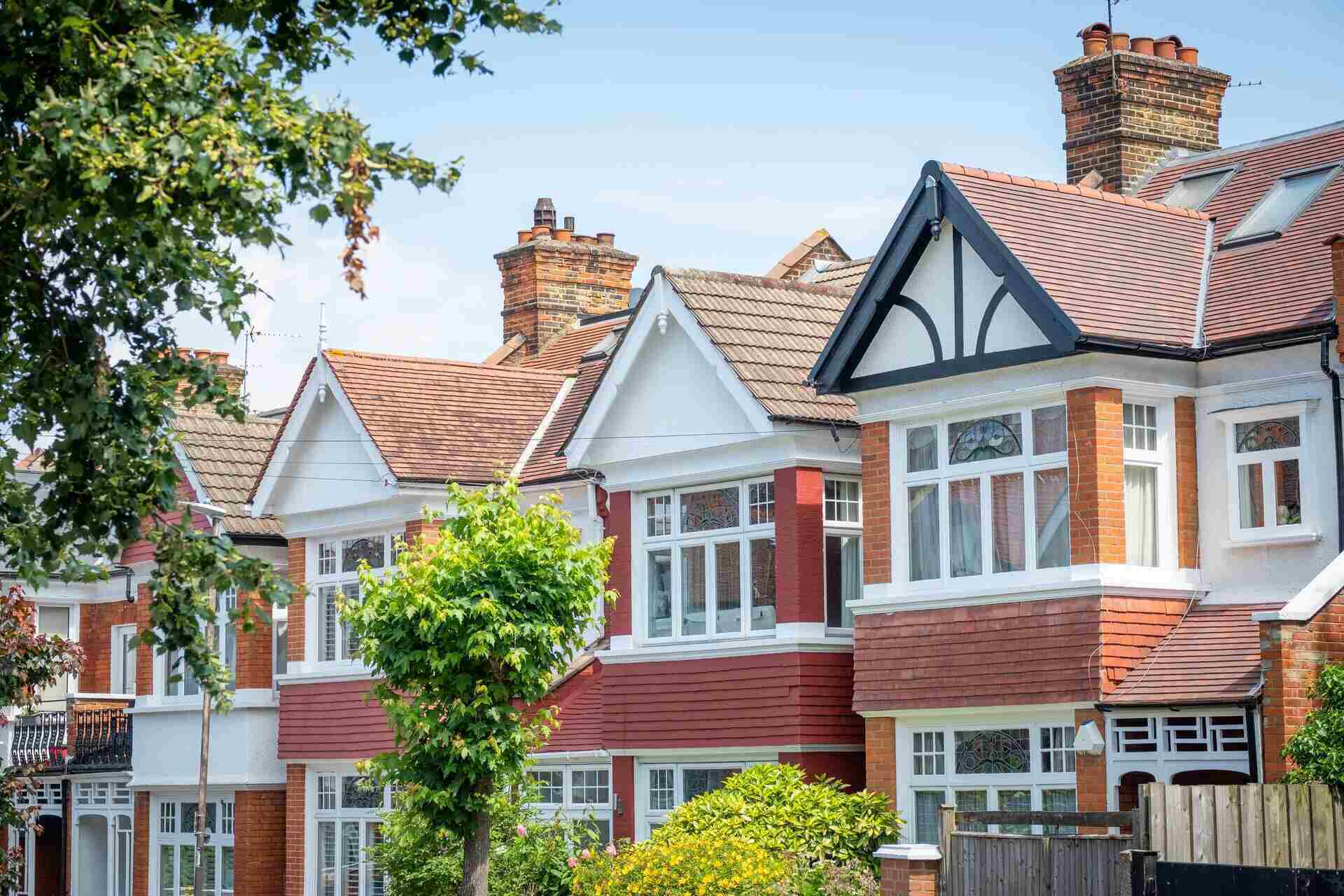
Wimbledon’s housing varies noticeably between its two halves. In the Village, expect period houses — many Georgian or Victorian, several within conservation areas — along streets that predate the railway. Around the town centre and towards South Wimbledon, Victorian and Edwardian terraces predominate, alongside a growing number of newer flat developments near the station. Flats make up the majority of sales across Wimbledon as a whole, though the Village’s terraced and semi-detached houses command significantly higher prices than the wider area’s flats.
Given how much of the Village and surrounding streets sit within conservation areas, renovation plans after a move here should factor in planning permission from the outset.
Wimbledon Property Prices: What SW19 Homes Are Actually Selling For
Estate agent guide prices are one thing; what people actually paid, recorded by HM Land Registry, is another — and Wimbledon’s internal price variation is genuinely striking. Over the twelve months to 30 April 2026, the average sold price across the whole SW19 postcode was £876,095.
Average Wimbledon House Prices by Property Type
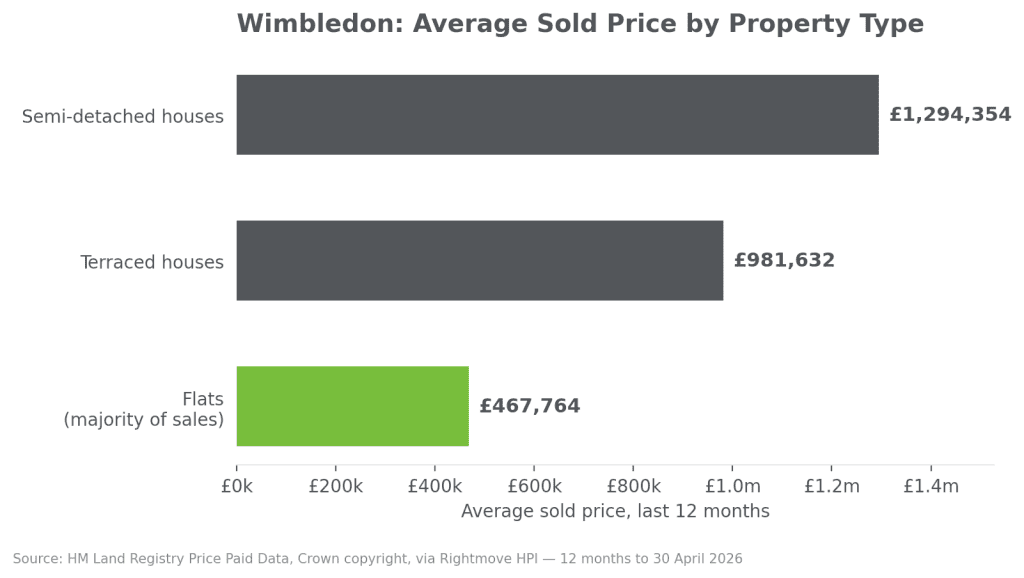 Flats made up the majority of sales in Wimbledon over the past year, averaging £467,764 — a fraction of the terraced and semi-detached houses that changed hands at averages of £981,632 and £1,294,354 respectively.
Wimbledon Village vs the Rest of SW19
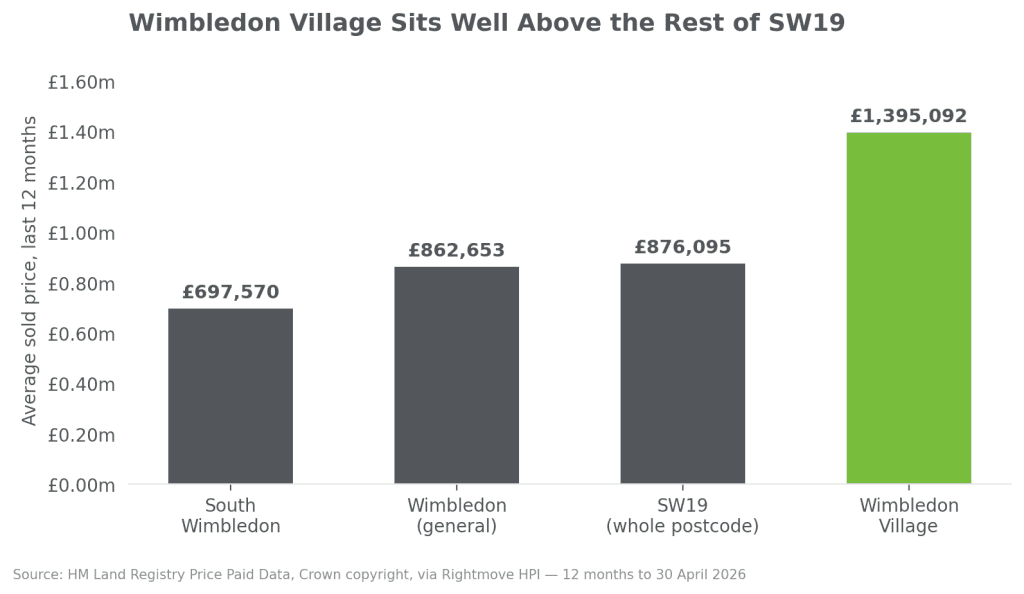
This is where Wimbledon’s internal variation really shows: South Wimbledon averages roughly £697,570, general Wimbledon averages around £862,653, the SW19 postcode as a whole averages £876,095, and Wimbledon Village sits well above all three at approximately £1,395,092. A single postcode, in other words, spans a genuinely wide range of price points depending on which part of Wimbledon you’re actually looking at.
SW19 House Price Trends: A Gentle Correction
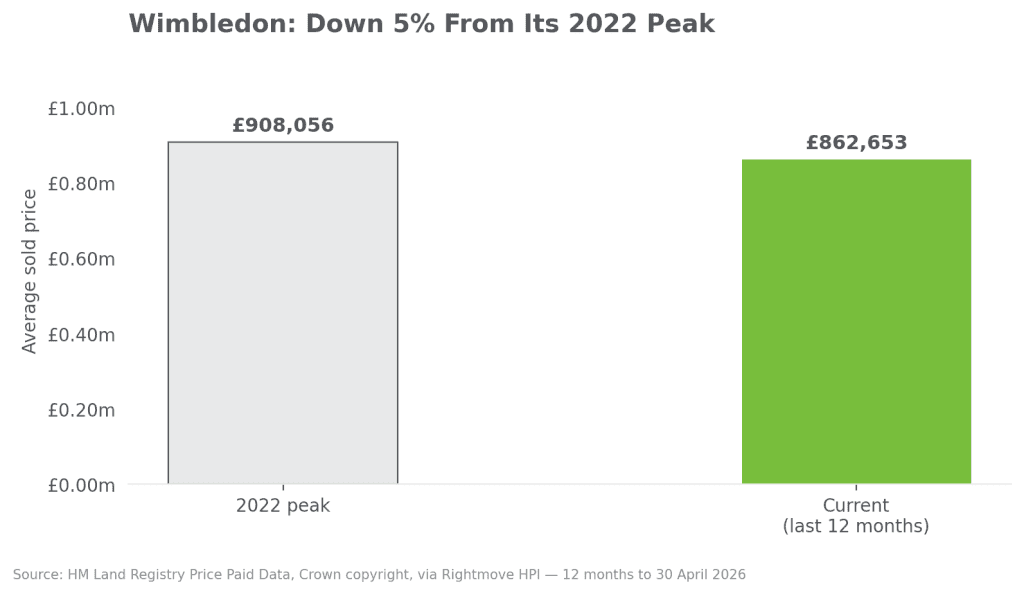
Wimbledon’s trend over the past year has been milder than several other areas we track: sold prices were roughly flat on the previous year and down around 5% on the area’s 2022 peak of £908,056 — a gentler correction than we’ve seen in some of London’s more central postcodes.
Source: HM Land Registry Price Paid Data, Crown copyright, via Rightmove’s House Price Index tool, data covering transactions to 30 April 2026, published 9 July 2026.
Wimbledon SW19 Removals Checklist: Before Moving Day
A few things worth sorting before the van arrives:
- Confirm which part of SW19 your move covers — Wimbledon Village’s period streets can have tighter access than the town centre or South Wimbledon.
- Apply for a Merton parking suspension or yellow line waiver at least 10 full working days ahead of your move.
- If your move falls near the Wimbledon Championships in early summer, check the dates and consider a different date if you have flexibility.
- If you’re moving into a conservation area property, check whether any post-move renovation plans will need planning permission before you commit to them.
If you’re planning a move into SW19, get in touch for a survey — our team knows the access realities of Wimbledon Village’s period streets, the town centre’s flats, and everything in between, and plans around them rather than finding out about them on the day