
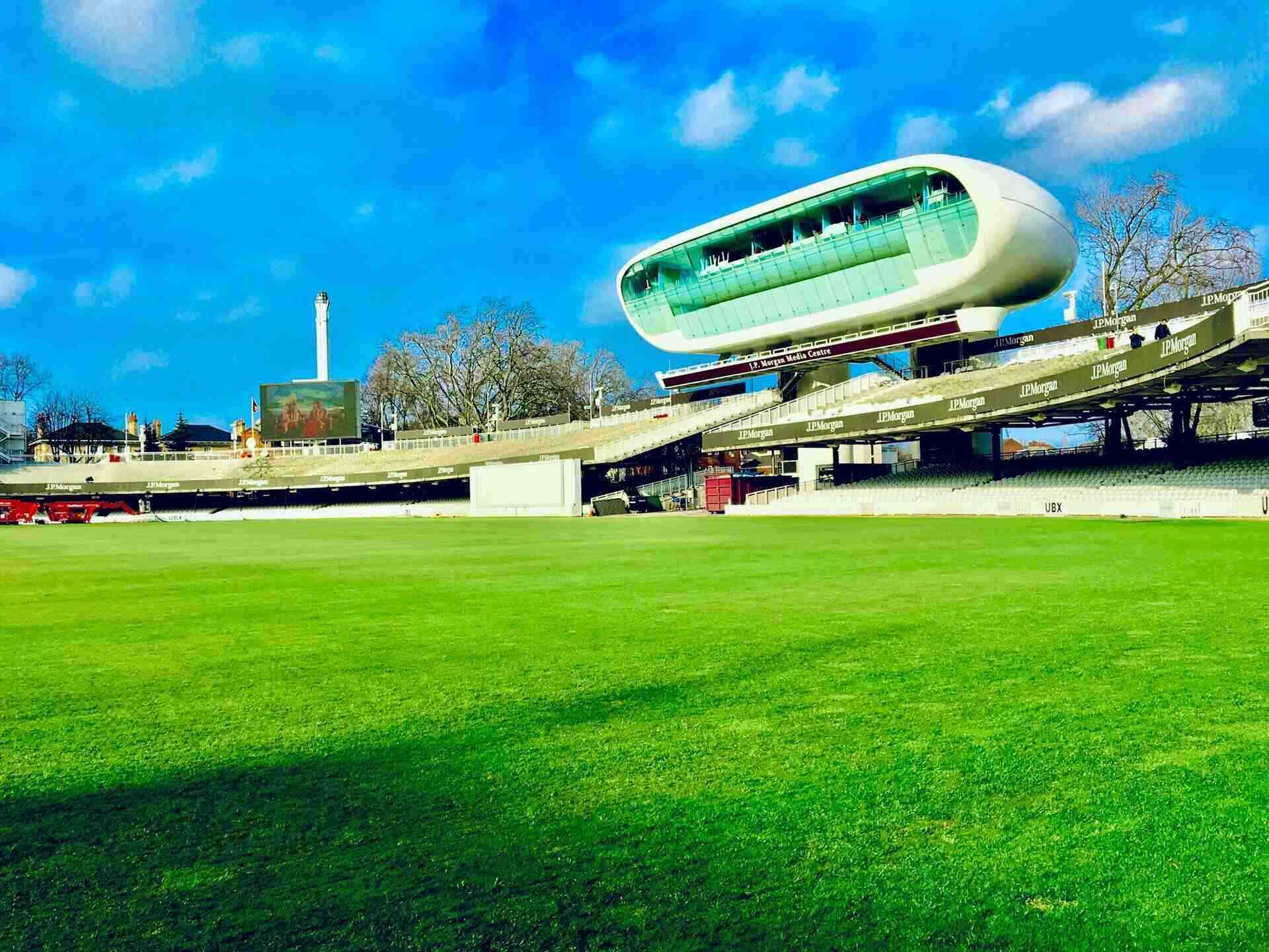
St John’s Wood sits on the northwest edge of Regent’s Park, in the City of Westminster, and it’s one of the more understated grand addresses in London — quieter and greener than its central postcode neighbours, but home to some of the highest property values in the country. NW8 takes in Lord’s Cricket Ground, Abbey Road, and the stretch of large detached houses around Avenue Road that regularly top the list of London’s most expensive streets.
We’ve been conducting removals in St John’s Wood since 2002, and the practical side of a move here usually comes down to a handful of things: gated mansion driveways, mansion block porters and lift bookings, and Westminster Council’s parking suspension process, which needs sorting well ahead of moving day. This guide covers the area itself, plus what genuinely matters for planning a move here.
St John’s Wood NW8 Areas: The Village, the Park and the Mansion Streets
St John’s Wood retains what’s often described as a village feel, centred on St John’s Wood High Street, with independent shops, cafés and restaurants a short walk from Regent’s Park. Avenue Road and the streets around it, closest to the park, hold some of the largest and most valuable detached houses in the country — Avenue Road itself was the site of the UK’s most expensive recorded home sale in 2020. Away from the grand houses, much of the area is given over to red-brick mansion blocks, popular since the early 20th century once hydraulic lifts made upper floors practical, and the streets around Abbey Road and Grove End Road have a mix of period conversions and purpose-built flats.
One boundary worth knowing: much of St John’s Wood is a conservation area, and a small part of that designation actually extends into the neighbouring London Borough of Camden — worth checking if your specific street sits on the edge.
St John’s Wood NW8 Transport: Two Minutes from Baker Street
St John’s Wood station, on the Jubilee line, is genuinely central despite the area’s leafy feel — two minutes from Baker Street and four minutes from Bond Street. Maida Vale and Warwick Avenue, both on the Bakerloo line, sit a short distance to the west. South Hampstead and Kilburn High Road, on the London Overground, are within reach for anyone heading north. Buses run along St John’s Wood Road and Wellington Road, and it’s a genuinely walkable area for anyone commuting into the West End or the City via Baker Street.
Best Schools in St John’s Wood NW8: Primary, Secondary and Independent
As with schools everywhere, Ofsted no longer issues its old single-word “Outstanding/Good” overall judgements, so check each school’s current inspection report directly rather than a rating quoted secondhand.
State primaries: Barrow Hill Junior School on Bridgeman Street (the school is sometimes still referred to by an older name, St John’s Wood Primary School, on some directories). Robinsfield Infant School on Ordnance Hill and George Eliot Primary School on Marlborough Hill operate together as part of the Robinsfield George Eliot Federation.
Secondary schools: Quintin Kynaston School, on Marlborough Hill, is the main state secondary academy serving the area.
Independent schools: Arnold House School, on Loudoun Road, is a Church of England preparatory school for boys aged 3 to 13, founded in 1905. The American School in London, on Waverley Place, is a private international school for kindergarten through high school and one of the UK’s most expensive day schools, with a strong American and international expat community.
Things to Do in St John’s Wood NW8: Attractions and Landmarks
Lord’s Cricket Ground, founded in 1814 and home to Marylebone Cricket Club (MCC) and Middlesex County Cricket Club, is known as the Home of Cricket and hosts regular international test matches — tours of the ground and its museum run outside match days. Abbey Road Studios, a short walk away, remains a working recording studio; the zebra crossing outside, made famous by the Beatles’ 1969 album cover, is Grade II listed in its own right and draws a steady stream of visitors recreating the photo.
Regent’s Park borders St John’s Wood to the east, offering the Regent’s Park Open Air Theatre, London Zoo, boating lake, and a 12,000-rose garden, with Primrose Hill’s panoramic views a short walk beyond. St John’s Wood Church Grounds, at the bottom of the High Street, contains the only nature reserve in the City of Westminster. The London Central Mosque, on the edge of Regent’s Park, is one of the largest mosques in the UK, with capacity for several thousand worshippers.
St John’s Wood NW8 Removals: What Actually Affects a Move Here
| Factor | What it means for your move |
|---|---|
| Conservation area coverage | Much of St John’s Wood is a conservation area, with a small section extending into the London Borough of Camden. Renovating after a move here will very likely need planning permission rather than relying on permitted development rights. |
| Parking suspensions | Westminster Council requires advance notice and payment for suspending a parking bay — apply as soon as your move date and access requirements are confirmed, since many NW8 streets are on permit-controlled or red route sections. |
| Gated and mansion block access | Many of the area’s largest houses sit behind gates or long driveways, and its mansion blocks often require lift bookings with the building’s porter. Confirm both with your removal company at survey stage. |
| Match and event days | Lord’s hosts major international fixtures through the summer, which can bring extra traffic and parking pressure to the streets around the ground — worth checking the fixture list if your move date has flexibility. |
St John’s Wood Property Types: Mansion Blocks, Grand Detached Houses and Period Conversions
St John’s Wood’s housing sits at the very top of the London market. Streets like Avenue Road hold some of the largest detached houses in the country, many with private grounds, several changing hands for tens of millions of pounds. Away from the grandest addresses, red-brick mansion blocks — many with porters, lifts and communal gardens — make up a large share of the area’s housing, alongside Victorian and Edwardian period conversions closer to the High Street and Abbey Road.
With much of the area under conservation area protection, renovation plans after a move here should factor in planning permission from the outset, and in some cases listed building consent for Abbey Road Studios’ immediate surroundings and other protected structures nearby.
St John’s Wood Property Prices: What NW8 Homes Are Actually Selling For
Estate agent guide prices are one thing; what people actually paid, recorded by HM Land Registry, is another — and NW8’s recent numbers tell a genuinely different story from most of the areas we cover.
Average St John’s Wood House Prices by Property Type
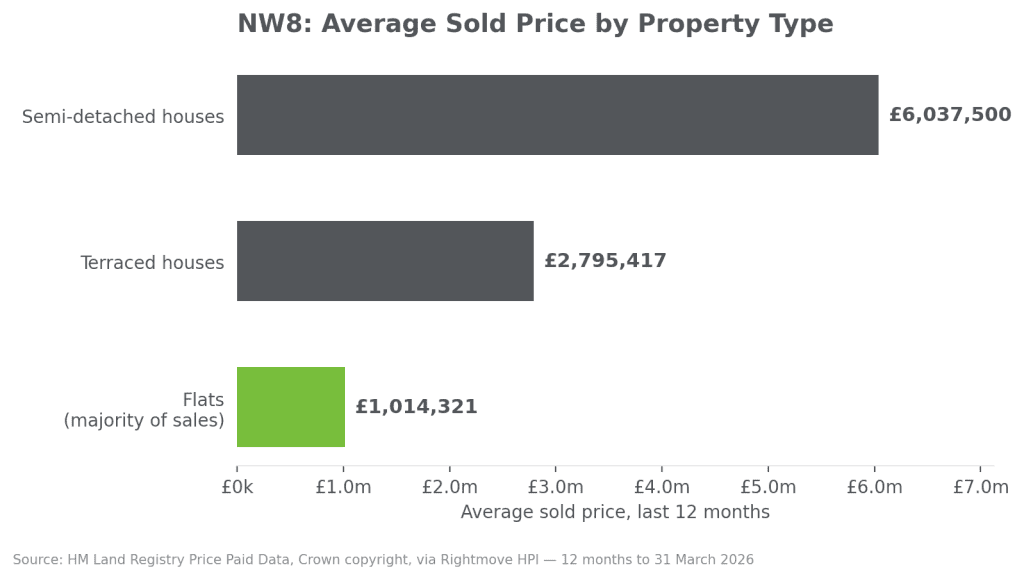 Flats made up the majority of sales in NW8 over the past year, averaging just over £1 million — itself a striking figure, but dwarfed by the semi-detached houses that changed hands at an average of over £6 million.
NW8 vs the St John’s Wood Area
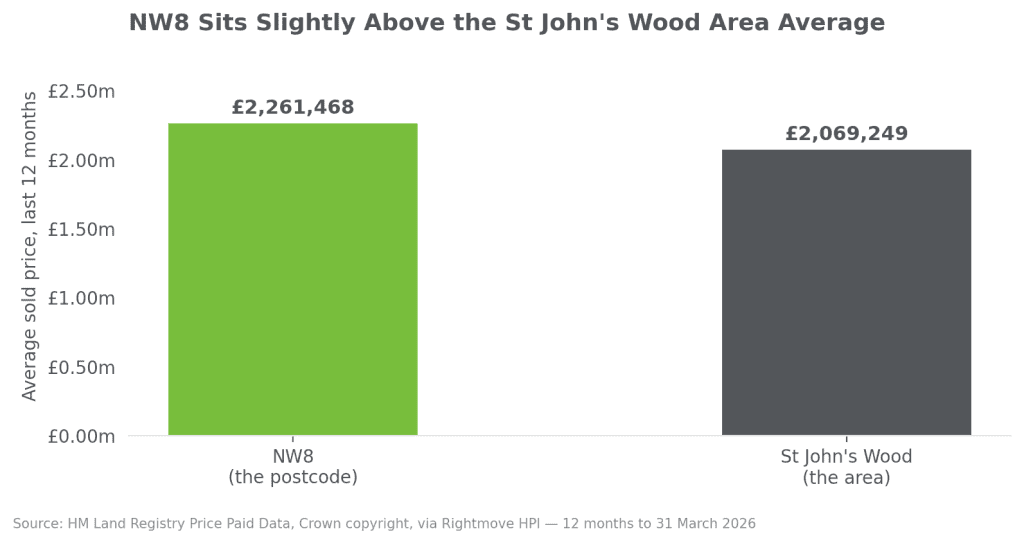 The NW8 postcode as a whole sits slightly above the average for the more narrowly defined “St John’s Wood” area itself, reflecting the very highest-value streets — Avenue Road among them — that sit within the wider postcode boundary.
NW8 House Price Trends: Growth, Not Recovery
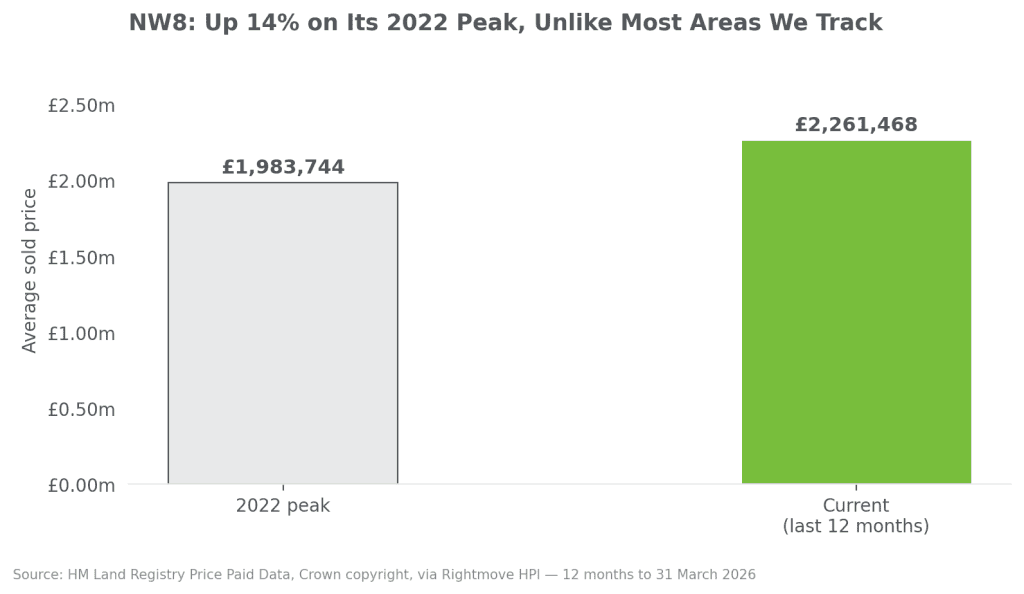 Unlike several other areas we track, NW8 isn’t recovering towards a previous peak — it’s exceeded it. Sold prices were up 13% on the previous year and 14% above the area’s 2022 peak of £1,983,744. It’s a reminder that London’s property market doesn’t move in one direction everywhere at once: some of the most established addresses have kept climbing even where the wider market has cooled.
Source: HM Land Registry Price Paid Data, Crown copyright, via Rightmove’s House Price Index tool, data covering transactions to 31 March 2026, published 15 May 2026.
St John’s Wood NW8 Removals Checklist: Before Moving Day
A few things worth sorting before the van arrives:
- Confirm access at your new property well ahead of survey day — gated driveways, long private drives and mansion block porters all need planning for.
- Apply for a Westminster parking suspension as early as possible once your move date is confirmed.
- If your move falls near a major Lord’s fixture, check the schedule and consider the extra traffic and parking pressure it brings to the surrounding streets.
- If you’re moving into a conservation area property, check whether any post-move renovation plans will need planning permission before you commit to them.
If you’re planning a move into NW8, get in touch for a survey — our team knows the access realities of St John’s Wood’s mansion blocks, gated houses and period conversions, and plans around them rather than finding out about them on the day.